
For coaching institutes
Your test series already has the diagnosis.
It prints a rank instead.
Every attempt carries which concept broke, on which form of question, and what the student actually wrote. Unio keeps that and hands it back as a report — per student, and per batch.
The gap
Thousands of attempts a month,
collapsed into one number.
A student drops from rank 12 to rank 35. A bad day, or a wall in organic chemistry that has been building for three weeks? The rank cannot separate the two, and neither can the percentile printed beside it.
The signal is not missing. It is generated and then thrown away: which concepts are weak, which forms of question cause the mistakes, which chapter a whole batch is quietly failing. All of it is already in the responses.
Every attempt comes back as a report
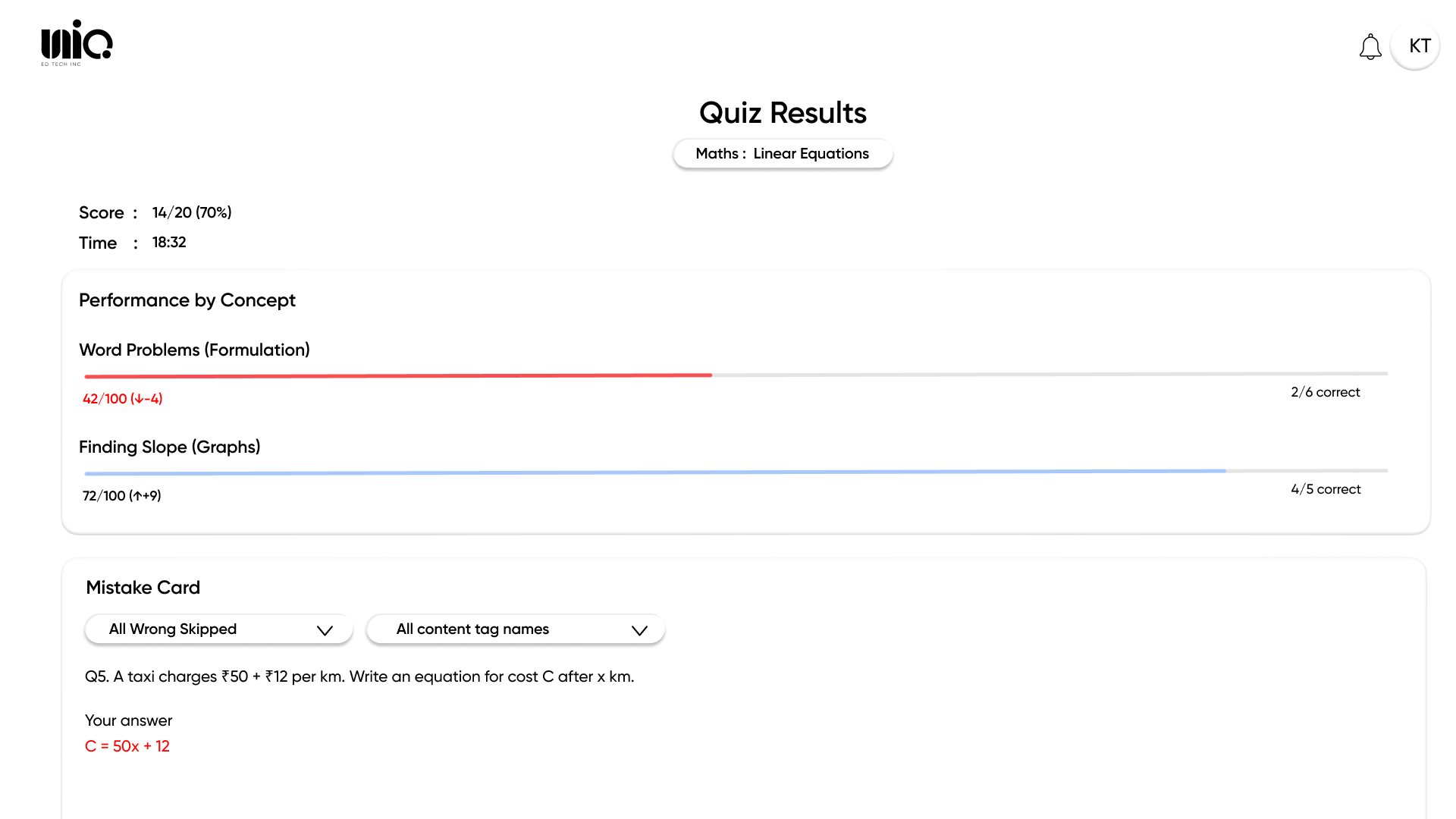
The student and the faculty read the same page. Score and time, then performance by concept with the count correct against each, then the mistake itself: the question, the answer the student gave, the answer that was expected, and the concepts that question was tagged to.
At the bottom, the next thing to do — named, and sized to a single sitting, instead of “revise the chapter”.
The concept behind the mistake
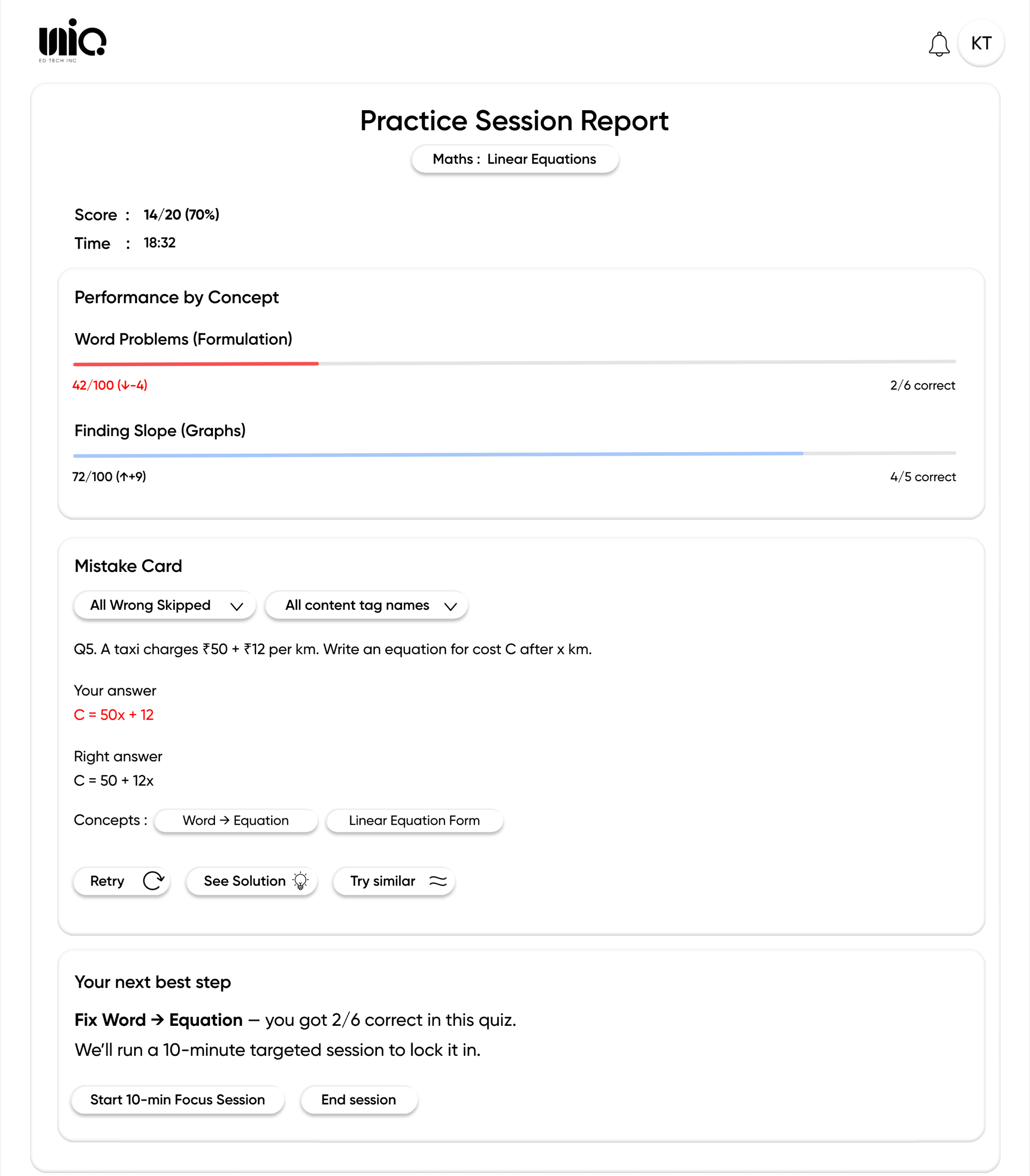
Open a concept on the map and it carries its own record: the score, how many questions it has taken, when it was last practised, and where the struggle actually sits — the verbal form of the question, or the translation from words into an equation.
Underneath it, the prerequisite chain. “Weak in linear equations” becomes “cannot get from a sentence to an equation”, which is a teachable thing.
Mistakes queue instead of disappearing
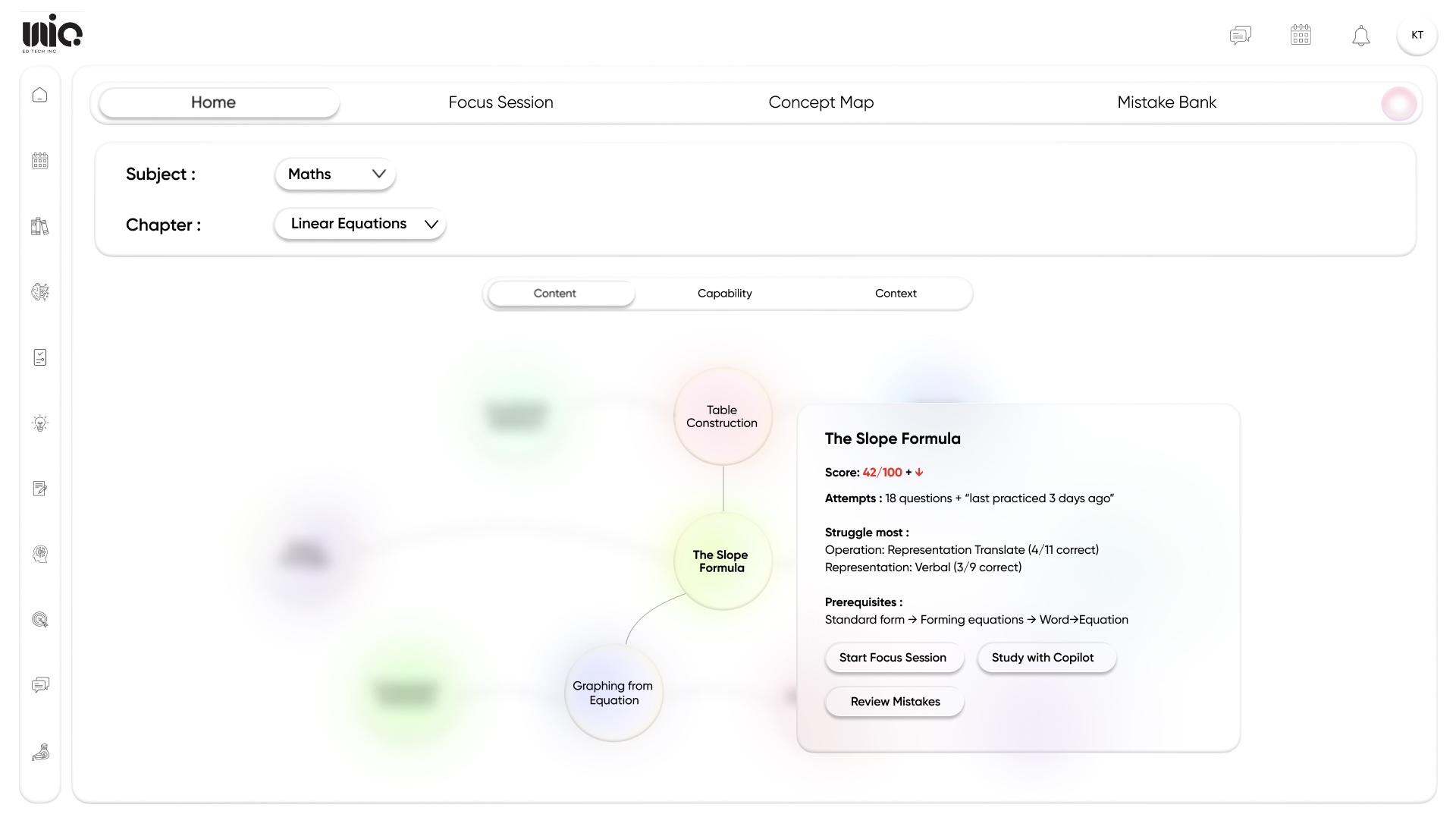
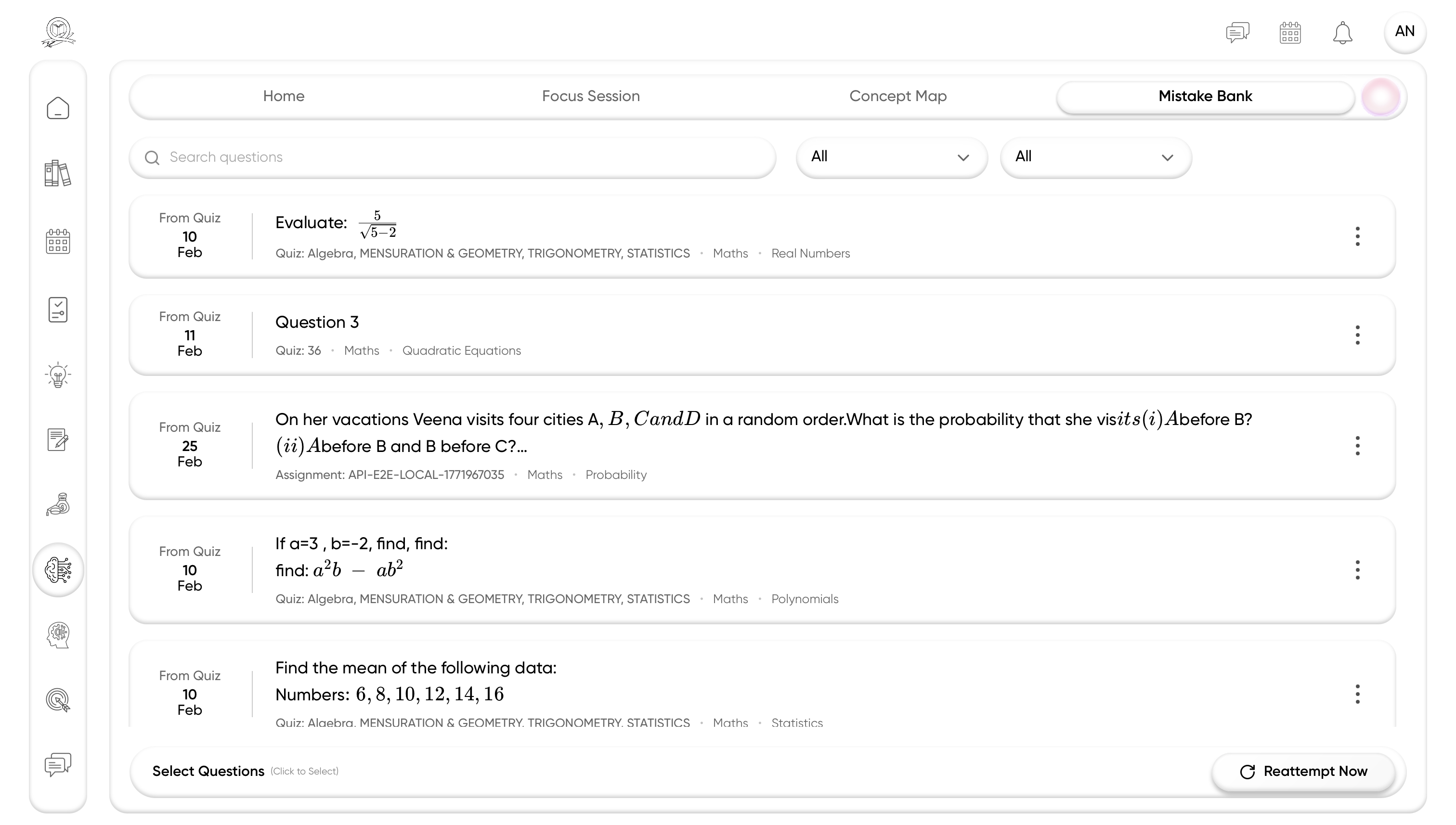
Every wrong or skipped answer lands in a mistake bank carrying the quiz it came from, the date, the chapter and the concept it was tagged to.
Faculty filter it, select from it, and send it back as a re-attempt. Revision stops being “do the module again” and becomes the twelve questions that actually broke.
Where the batch broke, question by question
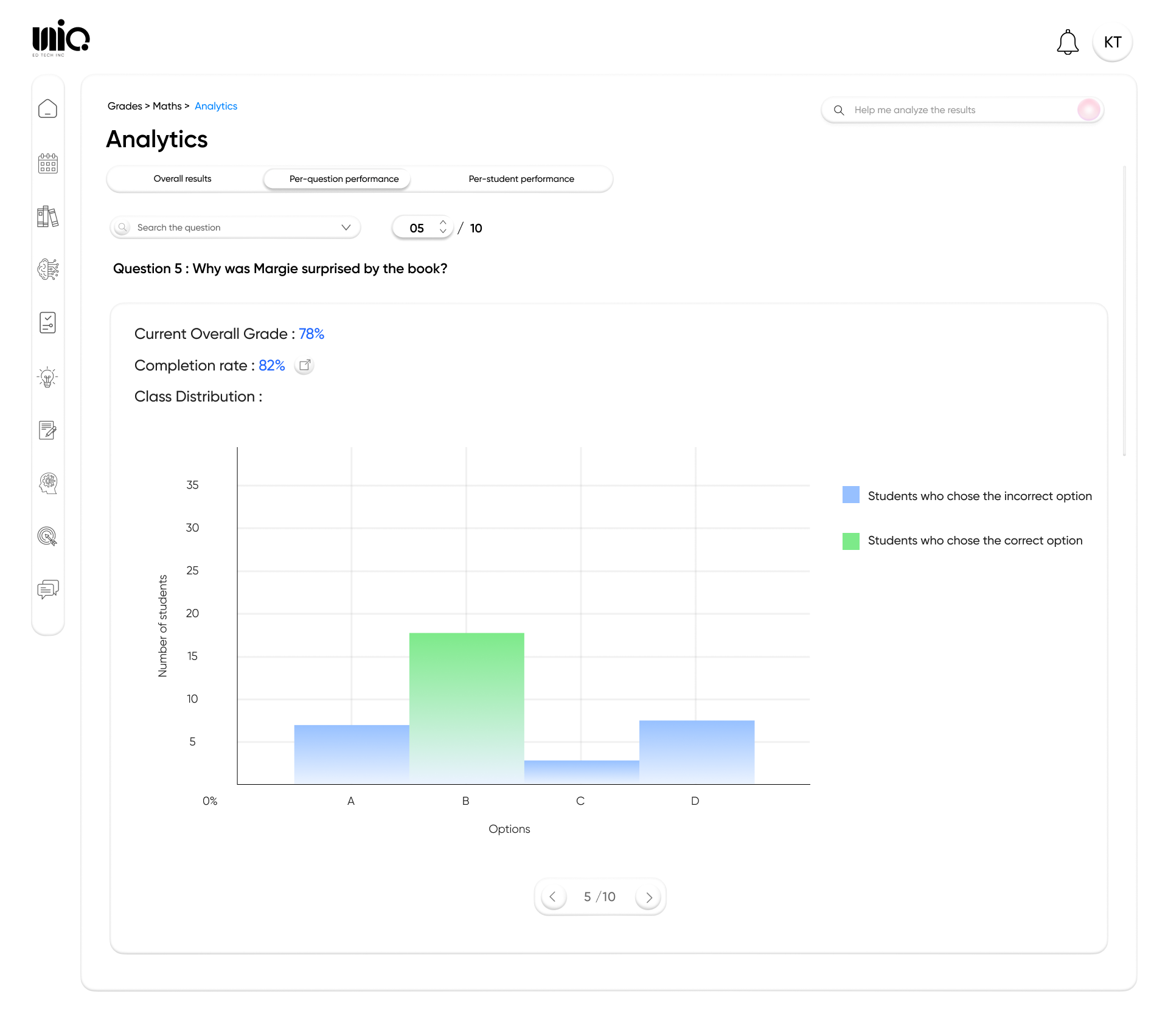
A test opens three ways: overall, per question, and per student. The per-question view shows how the batch split across the options — how many took the trap, how many took the right one.
When most of a batch chose the same wrong option, that is a note for tomorrow’s class, not a list of weak students.
Marking
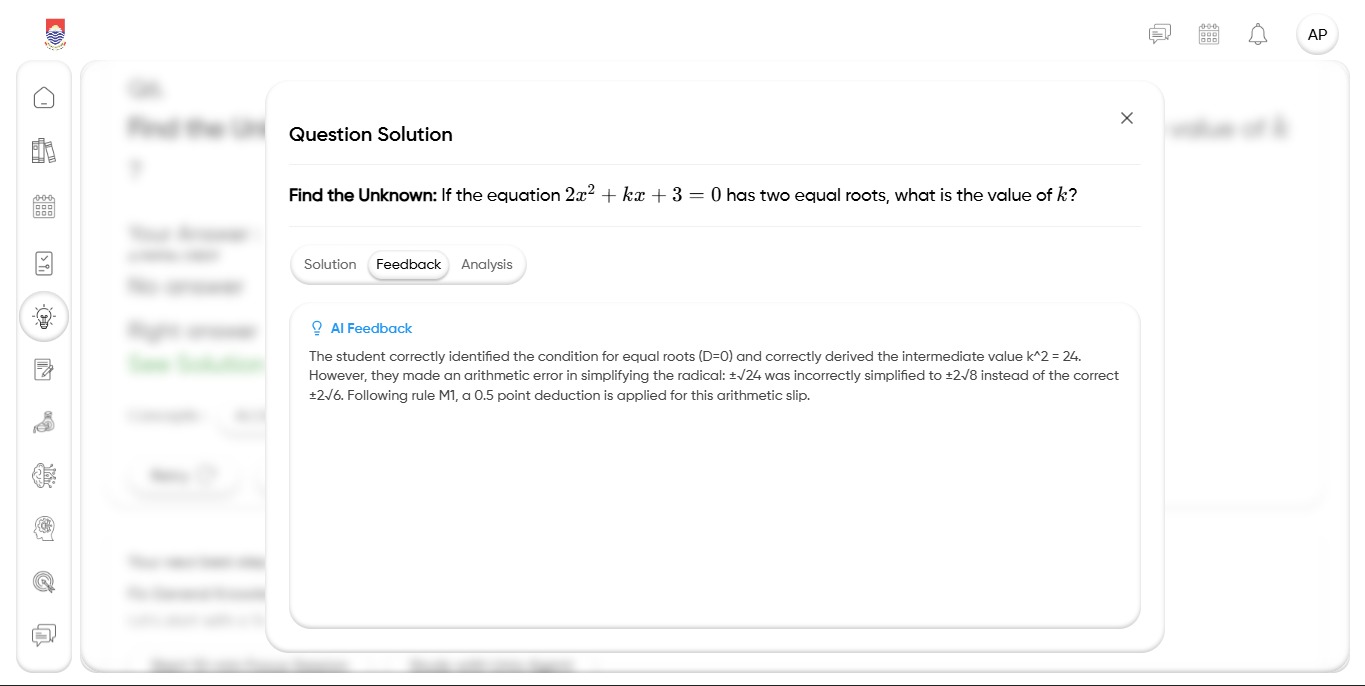
Marked with the reason attached
Subjective answers come back with the marking laid out: what the student got right, the exact step where it broke, and the rule the deduction came from. Faculty read it in seconds instead of reconstructing it.
How it works
Three steps to real diagnostics
Bring your test series in
Import your question bank or build it in Unio. We concept-tag the first set alongside your faculty, so the tagging is theirs and not ours.
Students attempt
Every response is captured against the concept its question was tagged to, along with the score and the time the paper took.
Teach the gap
Per-student and per-batch diagnostics, a mistake bank that can be re-issued as a set, and a per-question view of exactly where the batch split.
Send us one test series. We will send back the diagnostic.
Questions and student responses. We concept-tag the paper and return per-student and per-batch reports on your own data, before anything is installed.