
For schools
Same syllabus.
Wildly different outcomes.
Unio is NEP compliant, with competency tracking and career counselling built in. One system, for every section and every student.
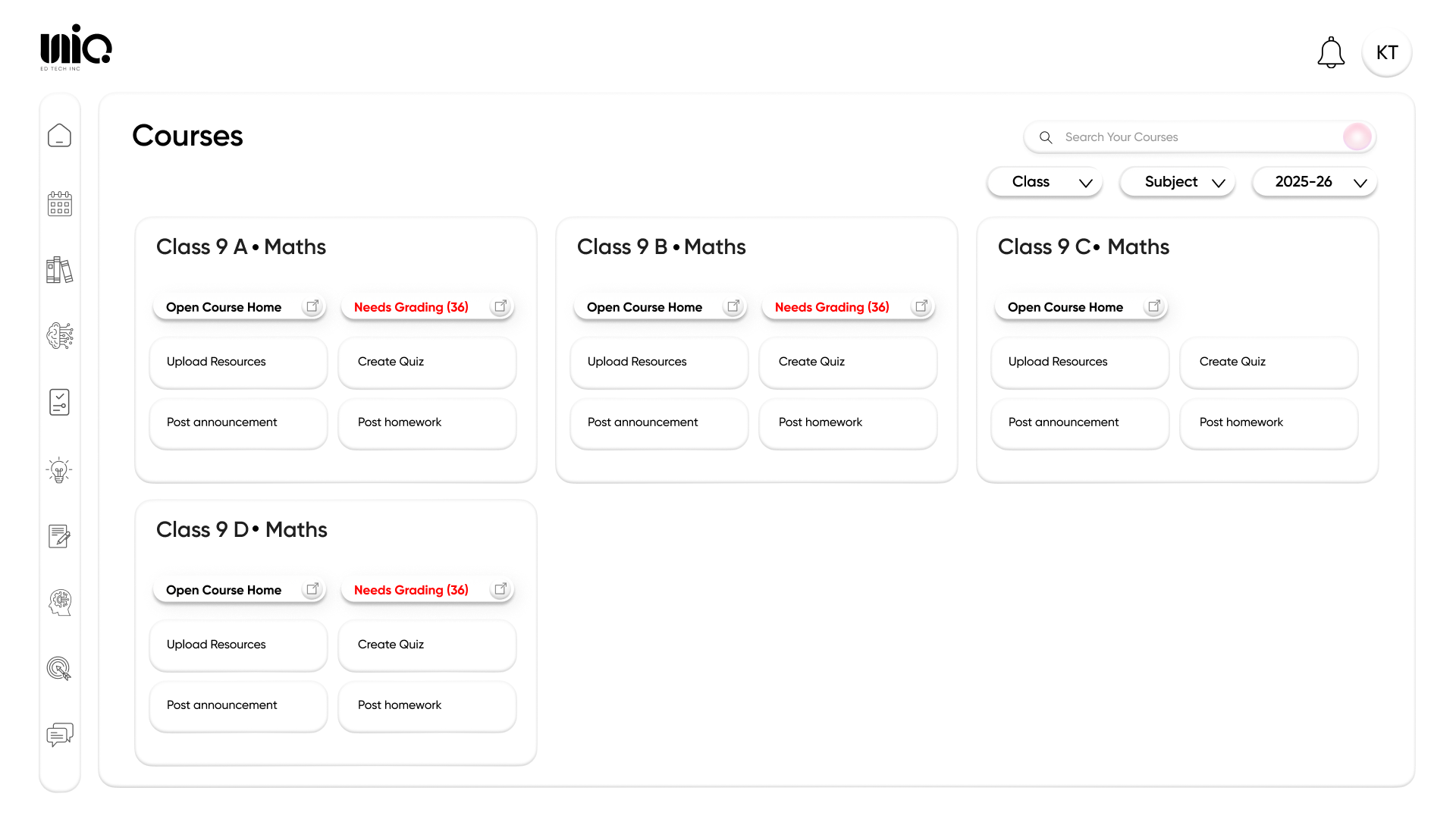
The gap
You know who passed.
You do not know who learned.
A 65 in maths can be clean algebra and no geometry at all, or it can be a flat, mediocre everything. Both print the same number. The marks sheet has no way to tell you which one you are looking at, and neither does the section average your academic heads compare every term.
So the gaps surface at the board exam, which is the one point in the year when nothing can be done about them. Unio moves that moment forward. When a section is behind on quadratic equations, it is visible in week three.
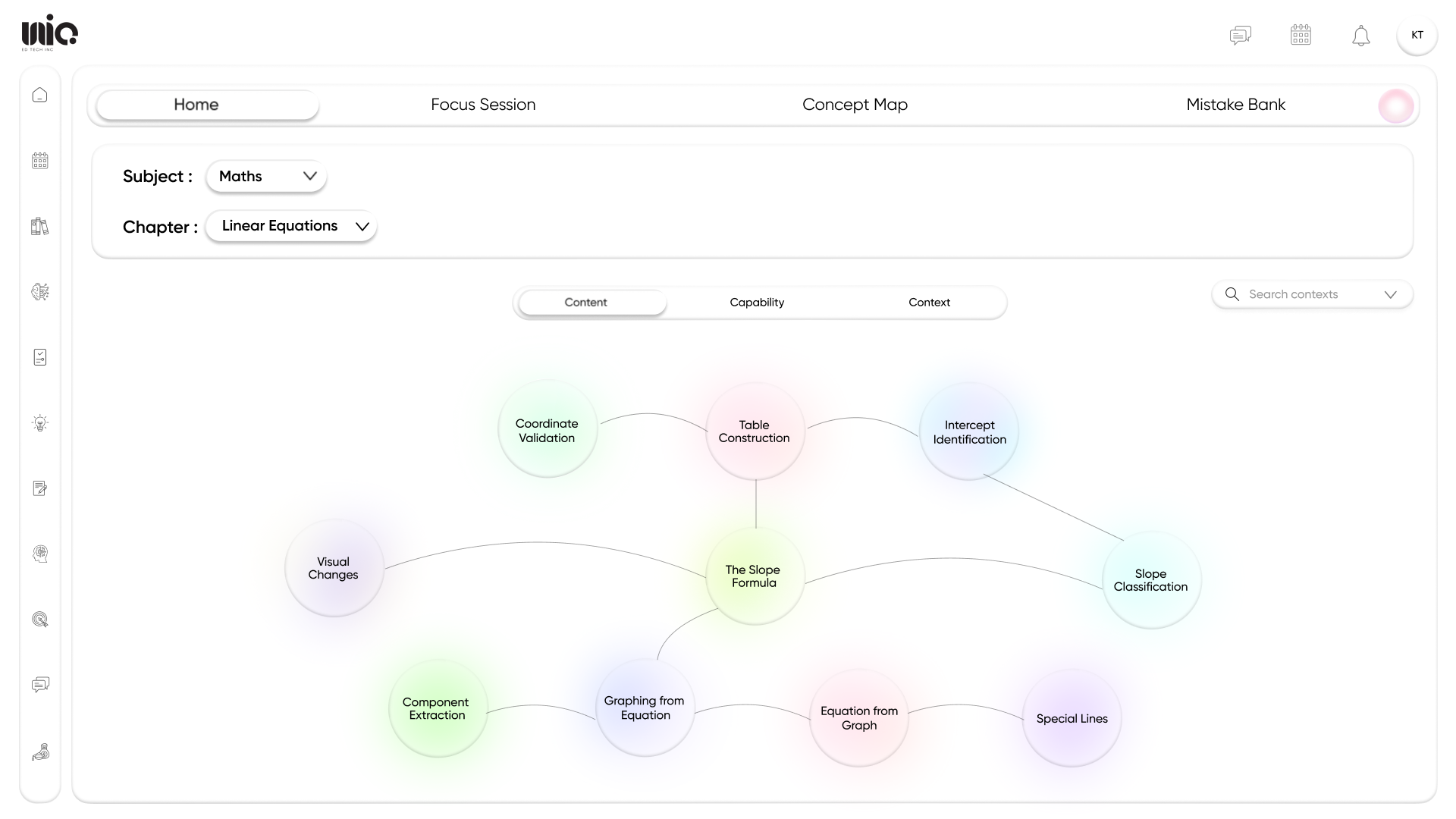
Every question carries its concept
A chapter in Unio is not a list of topics. It is a map: concepts, and the prerequisites each one rests on.
That structure is what turns a wrong answer into information. Failing “graphing from equation” while the slope formula underneath it is weak is a different problem from failing it on its own, and it needs a different lesson.
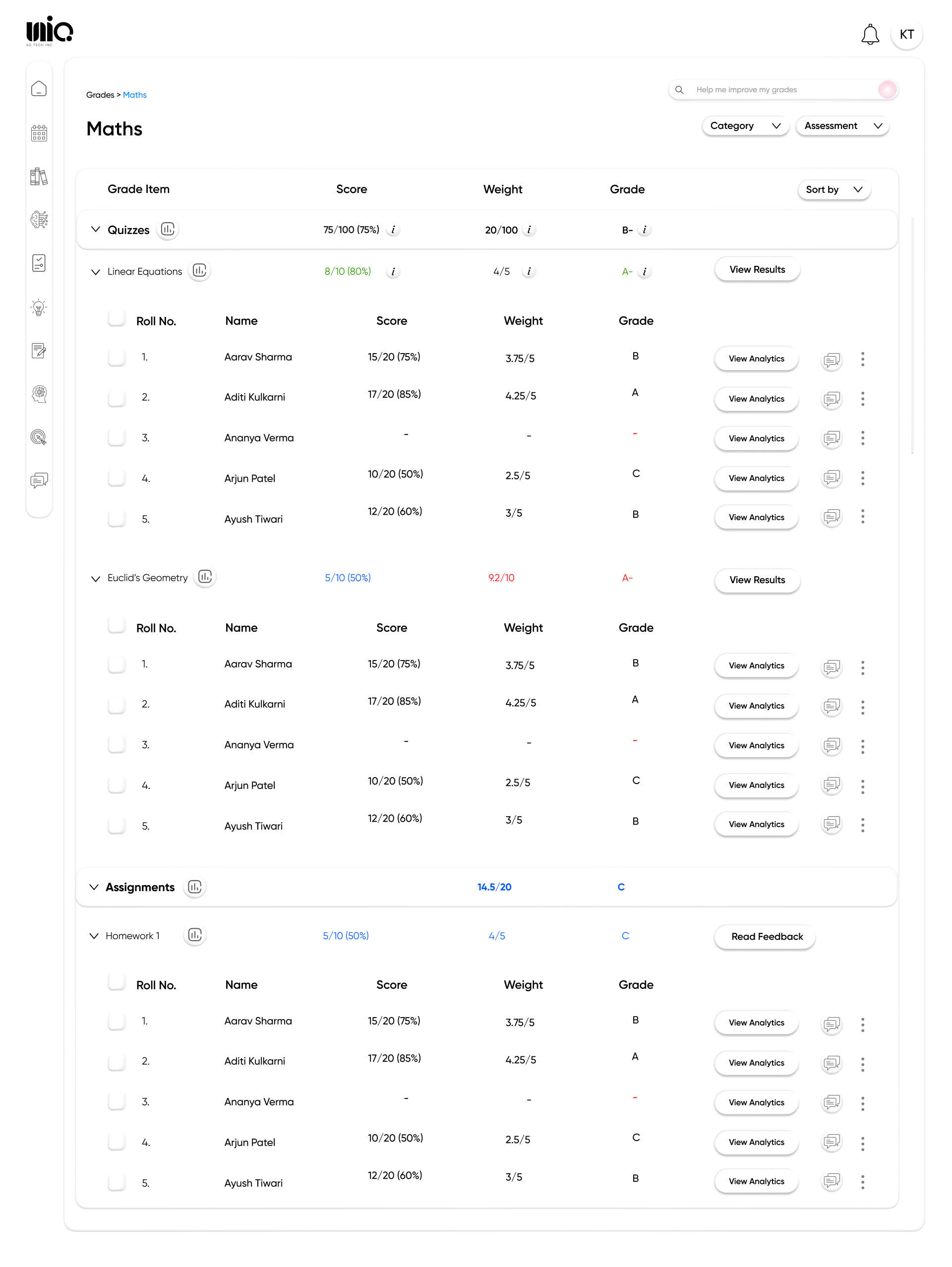
Grades that open all the way down
A grade is not a final number. Open a subject and it breaks into categories, then into each assessment, then into every student on the concept that assessment tested — score, weight and grade in the same row.
Two sections running the same paper can therefore be read against each other idea by idea, rather than by whose average came out higher.
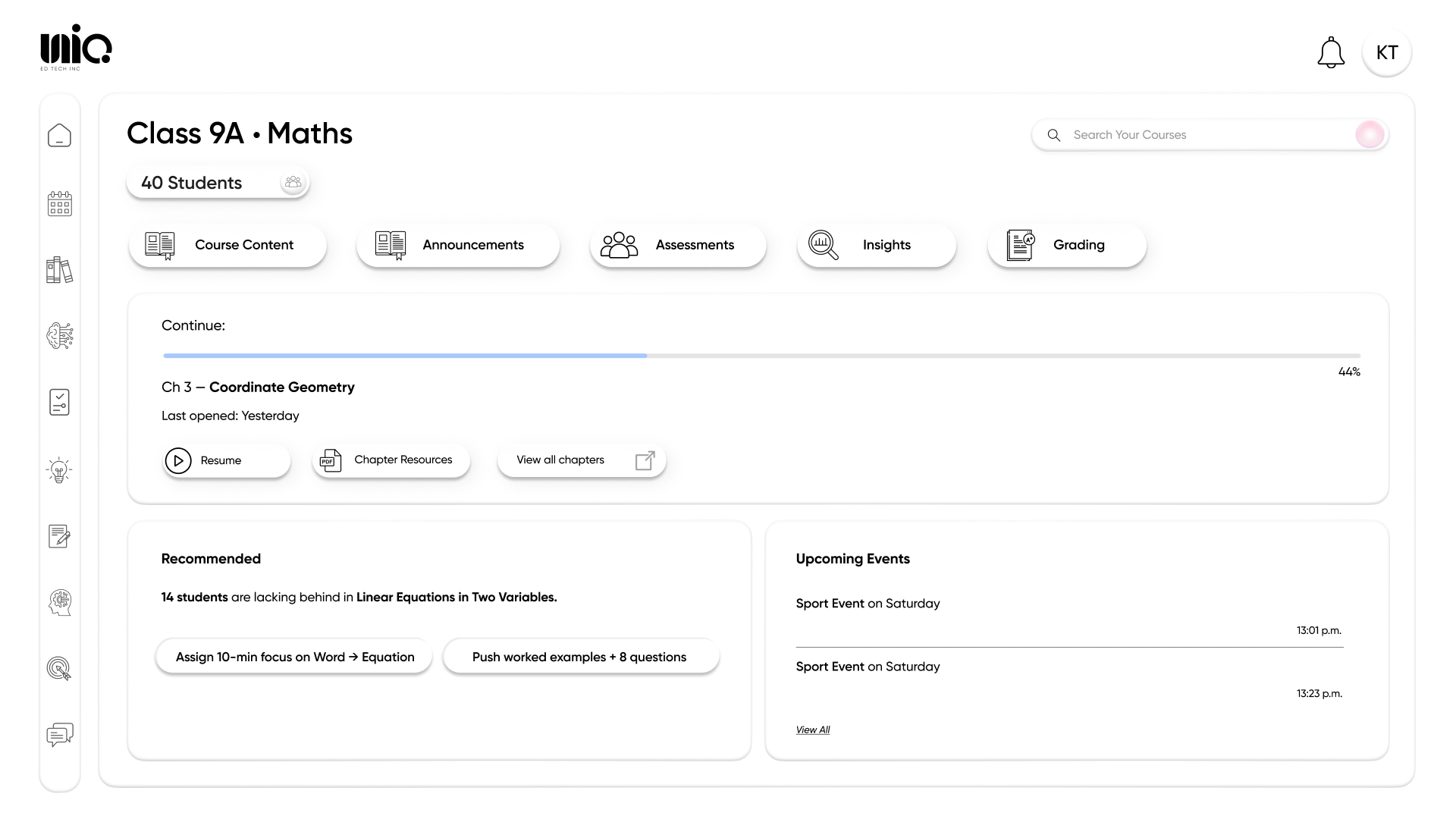
The signal reaches the teacher, not the archive
A teacher’s own course page opens on what needs attention: how far the class has got, and how many students are behind on which concept.
Beside it sit the two or three things that would actually help — a short focus session on the weak step, worked examples and a practice set — so a finding becomes a lesson rather than a report nobody opens.
A report a parent can act on
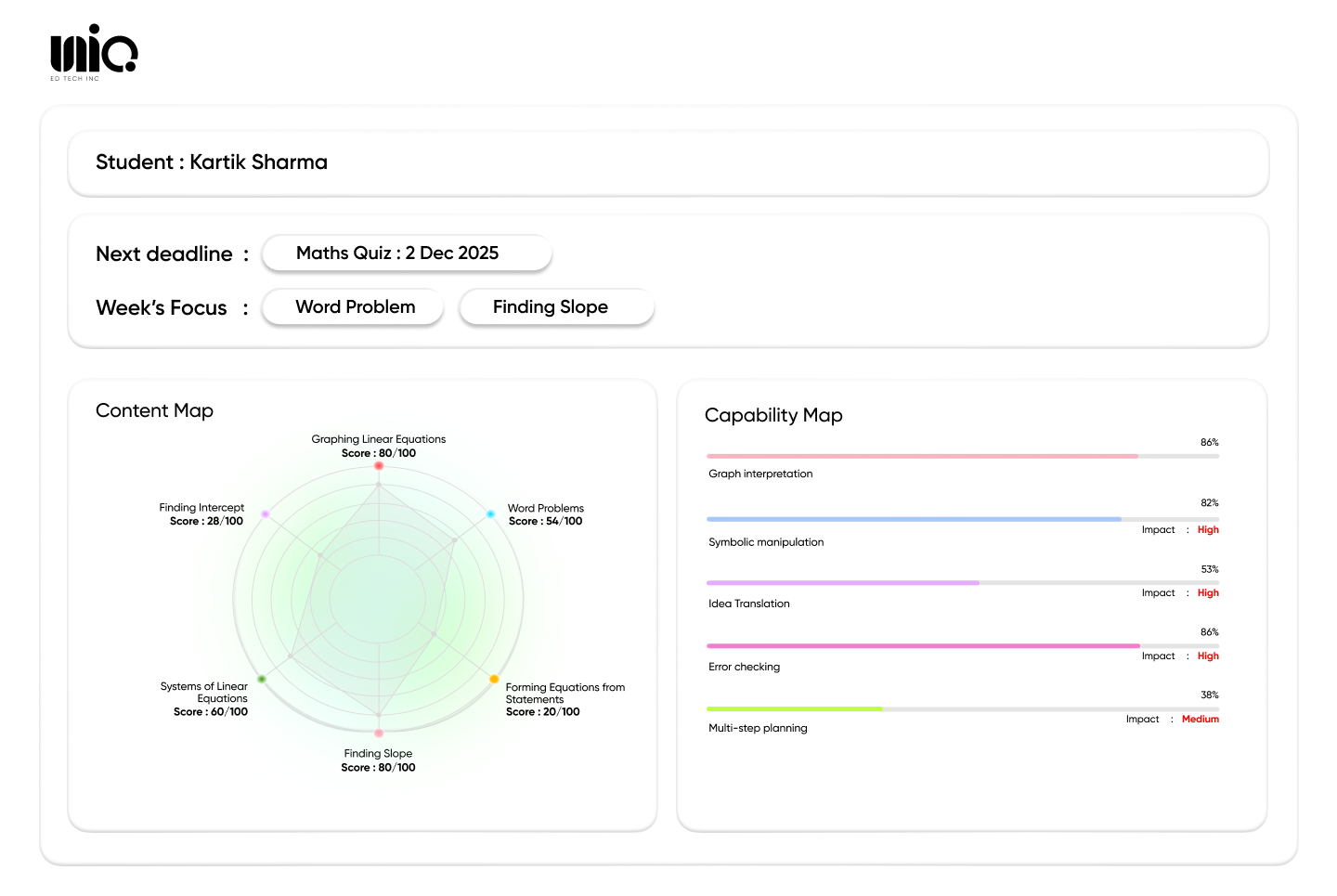
A student’s profile is a content map and a capability map: which concepts are holding, and which underlying capabilities — graph interpretation, symbolic manipulation, error checking — are doing the damage.
“Strong on finding slope, weak at turning words into equations” is a sentence a parent can use on a Tuesday evening. A percentage is not.
Past the marks sheet
The half of a student a report card has never held
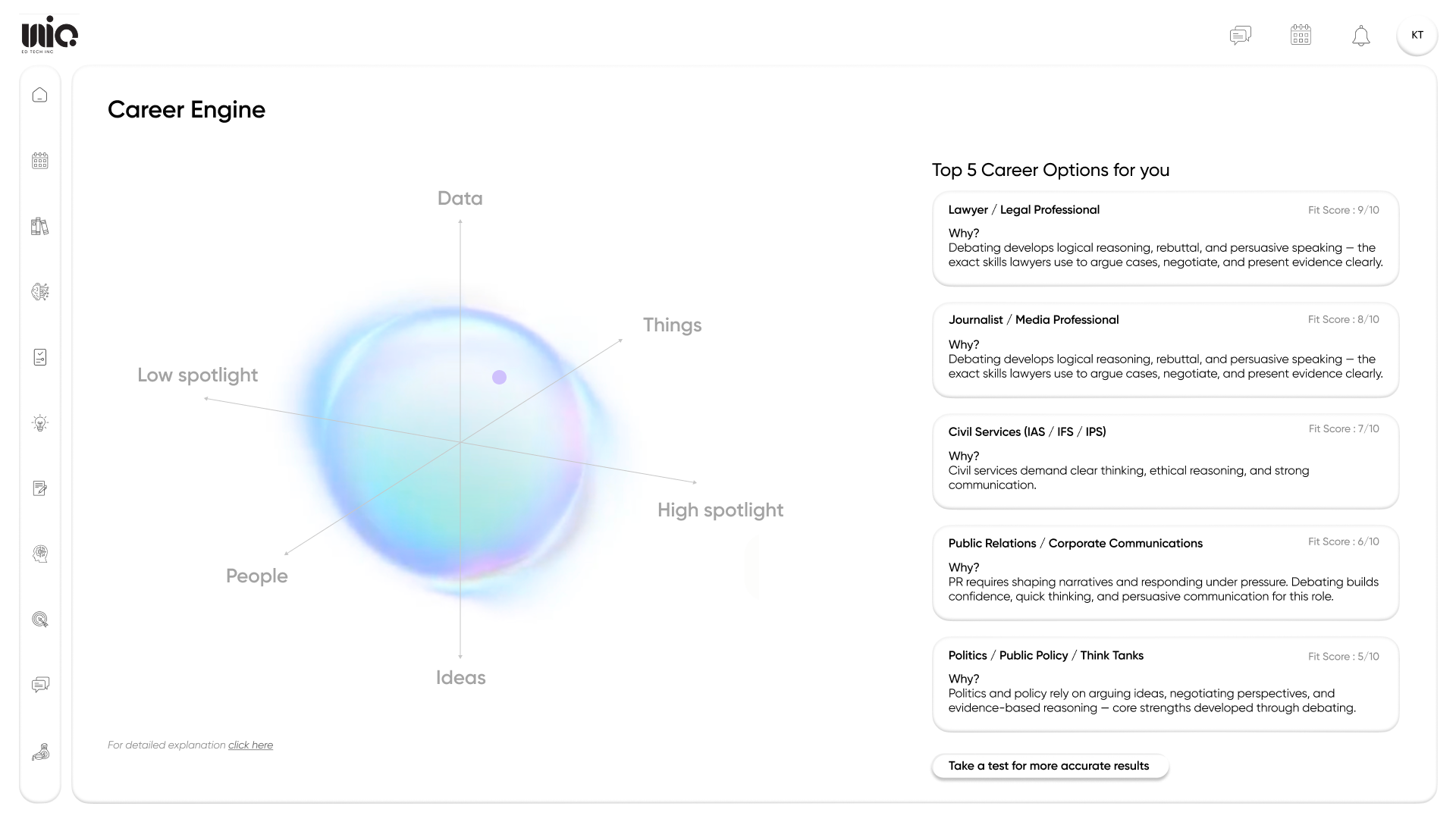
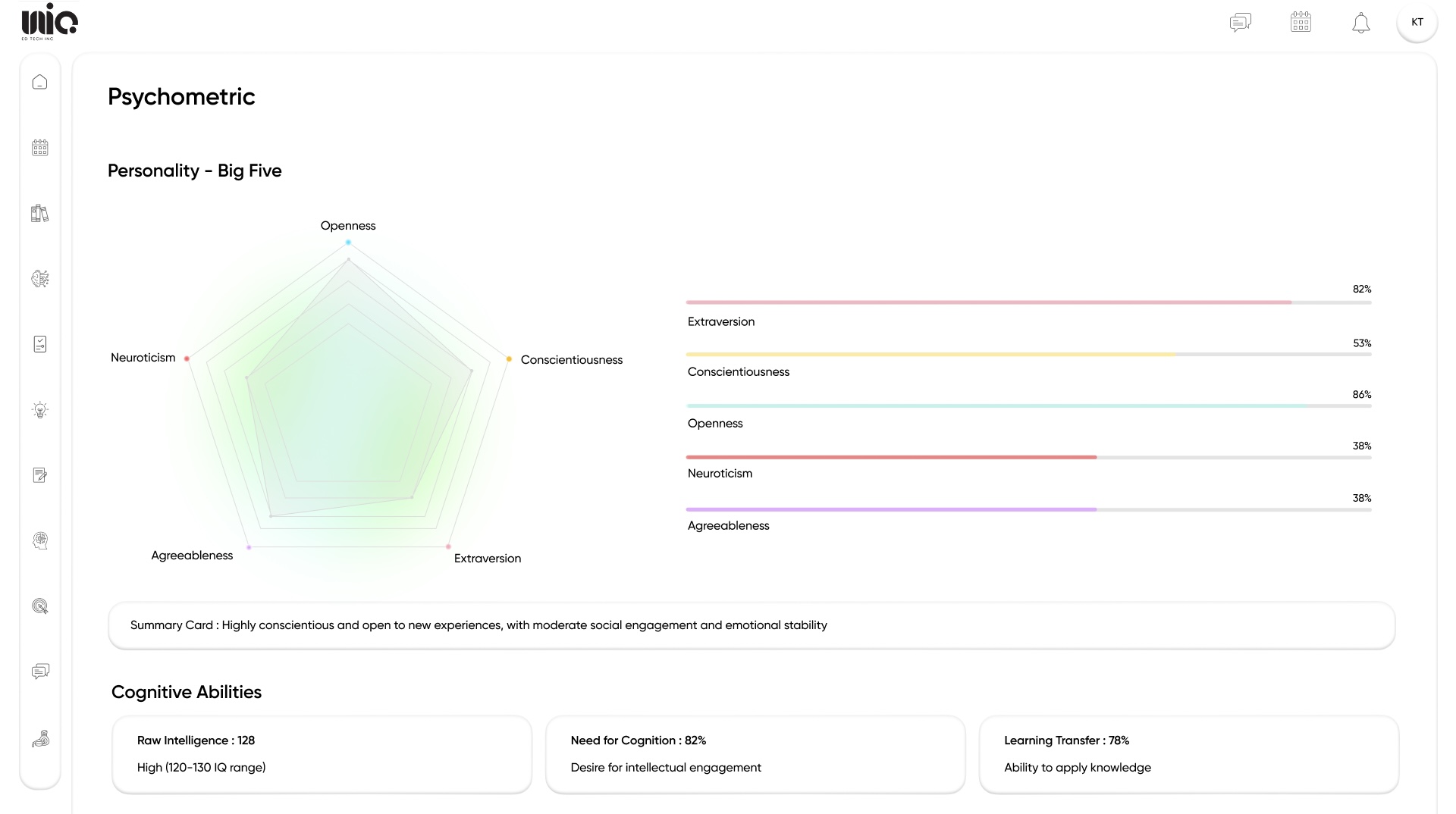
Every Unio school also gets the Model of Mind: a psychometric battery sitting under a career engine that places a student’s interests and capabilities on a map, then names the directions that fit and shows the reasoning for each one.
It is the conversation Class 9 and Class 10 parents keep asking for, and the one most schools have no material for.
How it works
Three steps to concept-level visibility
Bring your curriculum in
Your board’s curriculum maps to concepts and prerequisites across subjects and classes. We do the first pass alongside your academic team.
Teach and assess as you already do
Lessons, quizzes, unit tests, terminals. Everything you already set is read the same way, so nothing changes in a teacher’s week.
Read the school by concept
Mastery by student, by section, by subject — and the two or three actions sitting under each finding.
Send us one term of assessments.
We will send back the competency view for each of your sections, so you can read it on your own paper before anything is installed.